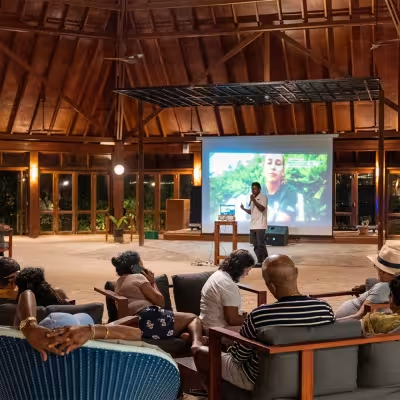
Canareef Resort Maldives marked World Turtle Day by hosting a marine conservation awareness talk the previous evening at its Dhoaraa Bar. The interactive session attracted an engaged group of guests and team members who gathered to learn more about protecting the delicate marine ecosystems surrounding the island.
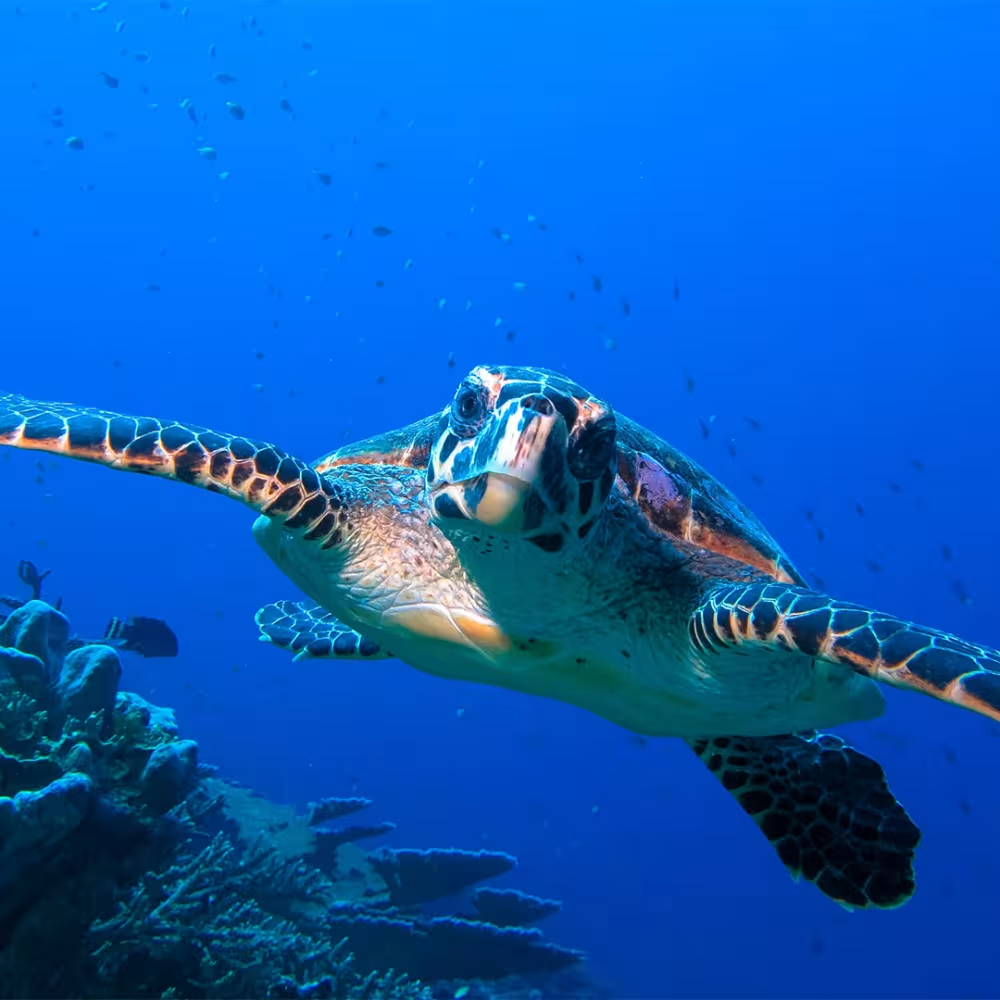
Situated within the highly biodiverse Addu Atoll, a designated UNESCO Biosphere Reserve, Canareef Resort is positioned directly above one of the most significant sea turtle habitats in the Indian Ocean region. The surrounding waters support more than 1,200 marine species, including two endangered resident turtles: the Green Turtle (Chelonia mydas) and the Hawksbill Turtle (Eretmochelys imbricata).
The conservation presentation outlined the distinct and essential ecological roles both species play within the reef environment.
Green Turtles function as key marine grazers, helping maintain healthy seagrass beds. Their grazing activity encourages new seagrass growth, which absorbs carbon dioxide and serves as an important nursery habitat for juvenile fish. Without their presence, these seagrass ecosystems risk collapse.
Hawksbill Turtles, identifiable by their narrow, pointed beaks, primarily feed on sea sponges. By controlling rapidly growing sponge populations, they prevent them from overwhelming coral colonies, ensuring reefs retain space to regenerate.
The session also addressed key modern threats affecting sea turtle survival, including plastic pollution, accidental entanglement in fishing gear (bycatch), and light pollution. Marine experts reminded attendees that sea turtles have navigated the world’s oceans for more than 100 million years—long before the Maldivian islands existed—yet their continued survival now depends heavily on human action.
To translate awareness into practical steps, Canareef Resort outlined a set of guidelines for supporting conservation efforts locally.
In the water, swimmers and divers are encouraged to maintain a respectful three-meter distance from turtles, avoid flash photography, and refrain from stepping on coral structures.
On the beach, guests are urged to keep shorelines free of personal items such as sunloungers and bags at night, ensuring nesting turtles and hatchlings encounter no obstacles. The use of torches on beaches after dark is also discouraged to prevent disorienting hatchlings as they navigate toward the ocean using the natural bright horizon.
Active reporting was also emphasized, with visitors encouraged to assist monitoring efforts by reporting any distressed or entangled turtles directly to the resort reception or the Diverland dive center team.
Canareef Resort Maldives continues to support regional environmental initiatives, including national turtle monitoring led by the Maldives Marine Research Institute (MMRI) and conservation frameworks such as the Addu Biosphere rules. Through educational programmes such as the World Turtle Day talk, the resort reinforces its commitment to sustainable tourism and the preservation of Addu Atoll’s natural heritage for future generations.