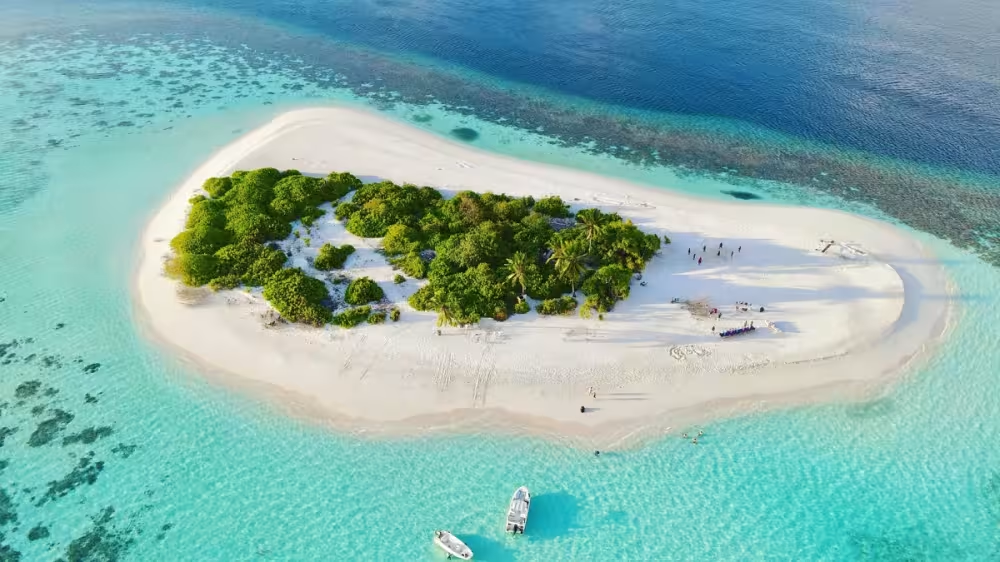
The Maldives is often imagined as a chain of luxury resorts floating above turquoise lagoons, where private villas and infinity pools dominate every postcard. Yet beyond the polished images lies another Maldives, one that many tourists never truly see. Scattered across the archipelago are quiet local islands where fishing boats still define the rhythm of the day, children cycle along sandy roads beneath coconut palms, and sunsets are watched from harbor walls rather than resort decks. These islands may not appear on celebrity travel lists, but they hold the kind of authenticity that many travelers spend years searching for.
Among the most underrated is Thoddoo, an island known not for luxury resorts but for agriculture and tranquility. Often called the fruit island of the Maldives, Thoddoo is filled with watermelon fields, papaya farms, and shaded roads lined with tropical greenery. Unlike busier tourism hubs, the island still feels spacious and calm, offering visitors a slower pace of life and beaches that rarely feel crowded. Travelers who venture there often discover that its greatest attraction is not an activity, but the atmosphere itself — quiet mornings, long walks, and genuine conversations with locals.
Further north, Dhonfanu remains one of the Maldives’ hidden treasures. Located within the UNESCO Biosphere Reserve of Baa Atoll, the island has managed to preserve both its marine environment and traditional lifestyle despite growing tourism in surrounding regions. Visitors are welcomed into a community where fishing, handicrafts, and island traditions remain part of everyday life. Nearby coral reefs and manta ray hotspots make the island ideal for snorkeling, yet it never feels commercialized. Instead of large resorts and beach clubs, Dhonfanu offers something increasingly rare in the modern Maldives: simplicity.
Another island quietly gaining admiration among travelers seeking authenticity is Maalhos. Small and peaceful, Maalhos offers the kind of intimate island experience that larger tourism islands often lose. Visitors can spend their days snorkeling vibrant house reefs, exploring quiet beaches, or simply observing daily island life unfold around them. The island has embraced tourism carefully, maintaining its identity while allowing travelers to experience local culture without feeling disconnected from the community.
In the central Maldives, Meemu Atoll remains largely overlooked despite its extraordinary beauty. Vast lagoons stretch across the atoll with very few inhabited islands and even fewer resorts. Travelers who make the journey often describe it as one of the quietest parts of the country, where the sea appears untouched and island life feels unchanged by mass tourism. Evening gatherings still revolve around community life, fishing remains central to the local economy, and the absence of crowds creates a rare sense of stillness.
Perhaps what makes these islands special is not simply their beauty, but their honesty. On local islands, visitors experience the Maldives as Maldivians themselves know it. There are morning fish markets, neighborhood cafés serving short eats and black tea, children playing football on sandy fields, and mosques that form the center of island communities. Travelers on forums and social platforms increasingly describe local islands as offering a “real Maldives” far removed from isolated resort experiences.
For decades, tourism in the Maldives revolved almost entirely around private resort islands, creating an image of the country that was luxurious but incomplete. Today, more travelers are beginning to look beyond that image in search of culture, community, and authenticity. The underrated local islands of the Maldives may not have underwater restaurants or celebrity villas, but they offer something far more personal — the chance to see a living island nation rather than just a curated paradise.
And perhaps that is the Maldives tourists never truly expect to find.